7 Practical Ways Every AI User Can Help Reduce Data Center Energy Consumption


A few days ago, I caught myself doing something surprisingly inefficient. I was carefully writing a prompt for an AI assistant… to explain a concept I already fully understood. I wasn't trying to learn anything new. I simply wanted the AI to rephrase my own thoughts. That's when it struck me: every unnecessary prompt still consumes computing resources somewhere. Behind every response are GPUs, servers, networking equipment and cooling systems working inside a Data Center. The impact of a single prompt is negligible. But multiplied by hundreds of millions of users every day, inefficient AI usage becomes part of a much larger energy challenge. That realization inspired this article.
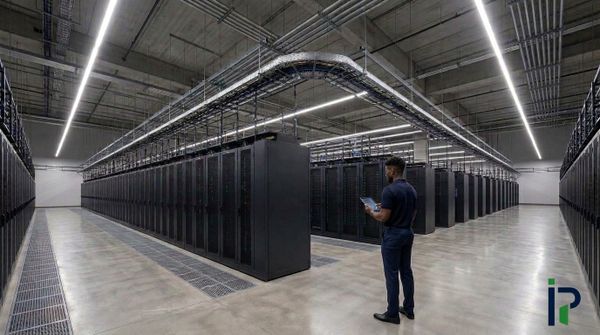
Artificial Intelligence is transforming the way we work. From writing reports and analyzing data to generating code or brainstorming ideas, AI has become part of our daily routines. What many users don't realize, however, is that every interaction with an AI model relies on physical infrastructure. Behind every prompt are servers, GPUs, storage systems, networking equipment and cooling technologies operating continuously inside Data Centers. This doesn't mean we should stop using AI. Quite the opposite ! The objective is to use AI more efficiently. Small changes, when adopted by millions of users, can significantly reduce unnecessary computing workloads, energy consumption and infrastructure demand. Here are seven practical habits every AI user can adopt.
1. Write Better Prompts Instead of Asking Multiple Times A vague prompt often leads to several follow-up requests before reaching the desired result. Instead of asking: "Tell me about Data Centers." Try:"Explain the main differences between Tier III and Tier IV Data Centers for enterprise workloads in less than 300 words." More precise prompts usually require fewer interactions, reducing unnecessary processing. Better prompts = fewer computations.
2. Ask for Everything You Need in One Request • Many conversations follow this pattern: • Translate this. • Make it shorter. • Add examples. • Rewrite it professionally. • Convert it into a LinkedIn post. Whenever possible, combine your requirements into a single prompt. One well-structured request is generally more efficient than several iterative ones.
3. Don't Generate Content You Won't Use It's tempting to ask AI for ten versions of a presentation, twenty marketing slogans or hundreds of ideas "just in case." If only one version will actually be used, avoid generating excessive alternatives. Generate what you genuinely need.
4. Reuse Previous Conversations Most AI platforms allow you to continue an existing discussion. Keeping context avoids repeating explanations from scratch and often produces better results with fewer prompts. It also saves time—for both you and the computing infrastructure supporting the interaction.
5. Use the Right AI Tool for the Job Not every task requires the most advanced reasoning model. Simple activities such as: correcting grammar, summarizing notes, translating text, brainstorming titles, can often be completed using lighter AI models. Using the appropriate model helps optimize computing resources without compromising productivity.
6. Verify Before Regenerating Many users immediately click "Regenerate" when the first answer isn't exactly what they expected. Instead, consider refining your request: "Keep the same answer but make it more technical." Or "Rewrite this for a non-technical audience." Small adjustments are often far more efficient than generating an entirely new response.
7. Remember That AI Runs on Physical Infrastructure AI may feel virtual, but its operation depends on very real infrastructure. Every interaction mobilizes computing power, electricity, cooling systems and network capacity. Using AI responsibly isn't about limiting innovation—it's about maximizing value while minimizing unnecessary resource consumption. Responsible AI begins with responsible usage.
Why It Matters As AI adoption accelerates worldwide, Data Centers are experiencing unprecedented demand for computing capacity and energy. Improving energy efficiency is not only the responsibility of infrastructure operators, equipment manufacturers or cloud providers. Users also have a role to play. Millions of small improvements in the way AI is used can collectively reduce unnecessary workloads while allowing critical computing resources to be allocated where they create the greatest value. Sustainable AI is a shared responsibility. At Infrapick, we believe that smarter AI usage and smarter infrastructure planning go hand in hand. Understanding how digital habits influence physical infrastructure is an essential step toward building a more resilient, efficient and sustainable Data Center ecosystem.
About the Author
A telecommunications engineer by training, Azimath Olayemi Adjassa has spent more than twelve years working across digital infrastructure, telecommunications and critical environments. Her areas of interest include the intersection of connectivity, Data Centers, digital sovereignty and artificial intelligence. She is a Data Center consultant and the founder of Infrapick, an advisory practice specializing in Data Center hosting decisions and capacity intelligence within the African infrastructure ecosystem. Her approach combines supporting organizations in making informed hosting decisions with improving the visibility of available infrastructure capacity for operators. Her ambition is to bridge the gap between user requirements and the operational realities of the industry, while contributing to a more transparent and accessible market—one where investment, hosting and development decisions are driven by reliable data and a shared understanding of critical infrastructure challenges.